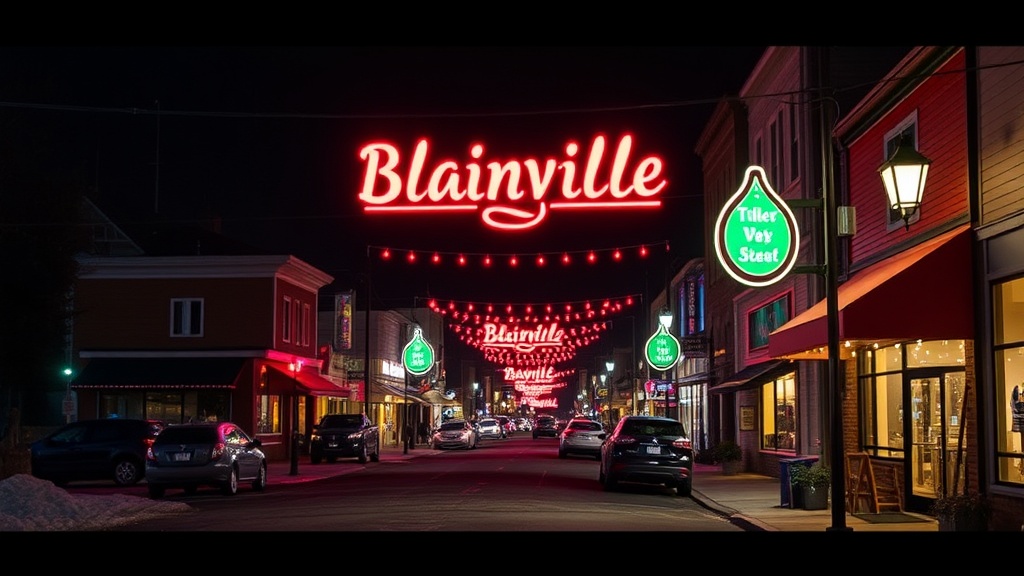
5 Reasons Blainville is Montreal's Best Kept Secret

Parc du Domaine Vert: Nature at Your Doorstep
Top-Rated Schools and Family-Friendly Neighbourhoods
A Thriving Local Food and Artisan Scene
Easy Access to Montreal Without the City Stress
Year-Round Community Events and Festivals
Blainville sits just northwest of Montreal, often overlooked by house hunters and weekend explorers chasing downtown buzz. This post breaks down exactly why that oversight is costing people — from families seeking space without the sprawl to professionals tired of the island's price tags. You'll get the facts on housing, transit, green space, and community life that make this suburb worth a serious look. No fluff. Just the local reality.
Why Do People Move to Blainville Instead of Laval?
People choose Blainville over Laval for lower property taxes, larger lot sizes, and quieter residential streets while maintaining similar commute times to Montreal.
Laval's got the Centropolis. It's got the Carrefour Laval. But here's the thing — it's also got traffic bottlenecks on the Pont Viau every single rush hour. Blainville offers a different deal. The homes here (think sectors like Blainville-sur-le-Lac or Chantecler) sit on bigger plots. You're looking at 6,000 to 10,000 square foot lots as standard — not the exception.
Taxes tell part of the story too. The municipal tax rate in Blainville typically runs lower than Laval's comparable sectors. That means more house for the mortgage payment, and less bleeding into property taxes each year. For young families stretching a budget, that gap matters. It means the difference between a fixer-upper and something move-in ready — or between one car and two.
The catch? You'll need to drive. Laval has the Metro. Blainville has the Exo commuter train (formerly the AMT), which runs from Blainville station down to Lucien-L'Allier in about 45 minutes. It's reliable. It's clean. But it's not the Metro. If you're working downtown, that train ride becomes part of your daily rhythm — coffee in hand, laptop open, same seat most mornings.
Worth noting: the exo train schedule thins out outside rush hours. If you're on a hybrid work model (three days home, two in office), it works beautifully. If you're commuting daily at odd hours, you'll be driving to the Henri-Bourassa Metro station or battling the A-15.
What Makes Blainville's Green Spaces Different From Other Suburbs?
Blainville maintains over 35 parks and 100+ kilometers of bike paths integrated directly into residential neighborhoods, not tacked onto industrial zones.
The crown jewel is Parc du Domaine-Vert-Nord — 220 hectares of forest, trails, and open meadows. You'll find cross-country skiing in winter (the trails link up with the Gatineau Park network standards, though smaller in scale), mountain biking in summer, and a proper sugar shack operation each March. It's not a manicured garden. It's wilder than that. Kids build forts in the woods. Dogs run off-leash in designated zones without bothering anyone.
Then there's the linear park along the Rivière aux Chiens. This isn't an afterthought. The path runs uninterrupted for kilometers, linking the older neighborhoods near the train station to newer developments west of Boulevard du Curé-Labelle. Cyclists use it for commuting. Parents push strollers at 6 PM. Teenagers longboard down the paved sections after school.
The city runs an active program — "Blainville en nature" — that organizes guided walks, birdwatching mornings, and winter snowshoe expeditions. These aren't token gestures. They're well-attended. Locals actually show up. The biodiversity here surprises newcomers. You'll spot great blue herons, red foxes, even the occasional deer wandering through backyards near the northern edge.
That said, not every park is maintained equally. Some of the newer subdivisions have pocket parks that are basically lawns with a swing set. If green space matters to you (really matters), stick to the areas bordering Domaine-Vert or the Curé-Labelle corridor.
How Does the Cost of Living in Blainville Compare to Montreal?
Housing in Blainville costs approximately 30-40% less per square foot than comparable Montreal neighborhoods, with significantly lower municipal taxes and insurance rates.
Here's a concrete breakdown for detached homes as of early 2024:
| Location | Avg. Price (Detached) | Avg. Lot Size | Municipal Tax Rate |
|---|---|---|---|
| Blainville (overall) | $750,000 - $850,000 | 7,000 sq ft | ~0.8% |
| Laval (Chomedey) | $700,000 - $800,000 | 5,500 sq ft | ~1.0% |
| Montreal (Ahuntsic) | $900,000 - $1.1M | 4,000 sq ft | ~1.2% |
| Montreal (Rosemont) | $950,000 - $1.2M | 3,000 sq ft | ~1.1% |
The numbers don't lie. You get more land, a newer build (most Blainville housing stock dates from 1980-2010), and lower carrying costs. Insurance runs cheaper too — no flood zones to worry about, newer electrical systems, and lower crime rates than the island.
Groceries, gas, and day-to-day expenses track roughly even with Montreal. You're not saving on milk or bagels. But the big fixed costs — housing, taxes, insurance — tilt heavily toward Blainville. For a family earning $120,000 combined, that difference can free up $800-$1,200 monthly compared to owning in Montreal proper.
Here's the thing about those savings: they get absorbed fast. You'll drive more (two cars becomes almost mandatory). Heating bills run higher in these larger homes. The "savings" often translate to quality of life upgrades — a finished basement, a backyard pool, a camping trailer parked in the driveway — rather than actual banked cash.
Is Blainville Actually Family-Friendly or Just Suburban?
Blainville ranks among Quebec's most family-oriented municipalities, with the highest youth sports participation rate in the Laurentides region and French-language schools scoring above provincial averages.
The sports infrastructure here is almost excessive. Centre de la nature (the municipal complex) houses two ice rinks, an Olympic-size pool, a rock climbing wall, and a full gym. Registration for hockey fills up fast — sometimes within hours of opening — but once you're in, the programs run smoothly. The city's recreation department publishes a seasonal guide thicker than some phone books. Soccer, tennis, karate, fencing, even parkour for teenagers.
Schools matter. The Commission scolaire de la Seigneurie-des-Mille-Îles (CSSMI) operates the French public schools here. École secondaire Blainville consistently posts graduation rates above 85%. The private options — Collège du Léman, École secondaire Jean-Jacques-Rousseau — draw students from across the north shore.
But "family-friendly" cuts both ways. If you're single, childless, or looking for nightlife beyond a quiet dinner at Le Milsa (Brazilian steakhouse on Curé-Labelle) or Microbrasserie Le Grimoire (local brewery with solid IPAs), Blainville thins out fast. The demographic skews heavily toward couples aged 35-50 with 2.3 kids and a minivan.
Worth noting: the library system punches above its weight. The main branch on Boulevard de la Seigneurie hosts author talks, maker workshops, and a summer reading program that actually engages teenagers. Not every suburb invests here. Blainville does.
What's the Real Commute Like From Blainville to Downtown Montreal?
Morning commutes from Blainville to downtown Montreal typically take 35-50 minutes by car during rush hour, or 45 minutes via Exo train from Blainville station to Lucien-L'Allier.
The A-15 (Autoroute des Laurentides) is your main artery. Before 6:30 AM, you'll fly downtown in 25 minutes. Between 7:00 and 8:30 AM? Add twenty minutes minimum. The bottleneck hits at the intersection with A-440 in Laval and doesn't clear until past the bridge. Reverse commute — coming home — often hurts worse. Friday evenings in summer, plan for an hour.
Remote work changed the equation. Pre-2020, daily commuting was the norm. Now, many Blainville residents go in twice weekly. That rhythm works. The train becomes bearable — almost pleasant. You catch up on email, read, zone out. The station has ample parking (unlike some commuter rail stops closer to Montreal where lots fill by 7:15 AM).
For those working in Laval's industrial parks — Saint-Martin West, Autoroute 440 corridor — the commute drops to 15-20 minutes. That's a sweet spot. Montreal wages, suburban costs, minimal traffic. Many Blainville residents work in Laval's pharma and aerospace sectors (Pfizer, Bombardier, Pratt & Whitney facilities) without ever touching the A-15's worst stretches.
The catch? Transit options beyond the train are limited. The RTM (Réseau de transport métropolitain) bus network exists, but frequencies don't support spontaneous trips. You're driving to the grocery store, to the gym, to visit friends. That two-car dependency adds up — payments, insurance, maintenance, winter tires.
Here's the thing about Blainville's location: you're 20 minutes from the Laurentian Mountains on weekends. Skiing at Sommet Saint-Sauveur becomes a morning activity, not a full-day expedition. The P'tit Train du Nord bike path — 200 kilometers of converted rail trail — starts just north in Saint-Jérôme. Weekend escapes don't require highway marathons.
So is Blainville Montreal's best kept secret? That depends on what you value. Space, quiet, good schools, and manageable commutes — yes. Urban energy, spontaneous nightlife, and one-car living — look elsewhere. The secret's out among young families. The question is whether it stays secret long enough for you to get here before the prices catch up.